
Flying Bark Productions
3D Animation 101
How computer-animated features and series actually get made — from a blank page to a finished frame.
The 3D animation pipeline is fairly standardised across the industry. The broad shape of it — develop the story, build the assets, then produce the shots — is much the same wherever you go, and an artist moving between studios will recognise the work immediately.
What varies is the vocabulary and where the lines between departments are drawn. One studio's surfacing is another's look development; effects might be a single department or three; a task that sits with layout in one place sits with animation in another. None of that changes what actually has to happen to get a frame finished — it changes what it is called and who does it.
Whether it is a feature or a series, a 3D animated production is built in three broad movements:
These phases overlap far more than any diagram suggests. Story keeps changing while models are being built; lighting starts on early sequences while animation is still being worked on later ones.
The departments below are the same for both formats. What changes is the rhythm. A feature typically runs four to five years from first pitch to release, building towards a single delivery. A series builds its assets once and then runs them through the pipeline again and again, episode after episode, on a schedule measured in weeks rather than years.
What follows is the Flying Bark version: our terminology, our department boundaries, and the way we run a show.
Phase One
Development
Before anything is built, the show has to be worked out — on paper, in a recording booth, and on a timeline.
Animatics
The story is worked out visually, not in prose. Artists draw thousands of storyboard panels, which are cut against the recorded dialogue into an animatic — a rough moving version of the film or episode, timed to the second. The animatic is the first point at which anyone can actually watch it, and it is screened, torn apart and rebuilt repeatedly. Sequences are frequently re-boarded from scratch. Nothing moves downstream until a sequence works here, because fixing a story problem in an animatic costs days and fixing it after animation costs months. On a series the animatic does more work still: with less time and budget per minute than a feature, it is where the episode is locked, and very little is allowed to change after it.
Design
Concept artists establish how the show looks and feels: character designs, colour scripts, environments, costume, lighting keys, graphic language. This is where the show's identity is set, long before anything is built in 3D. A series has to design for longevity — a look that can be produced at volume, and a cast and world that will still hold up across dozens of episodes and possibly several seasons.
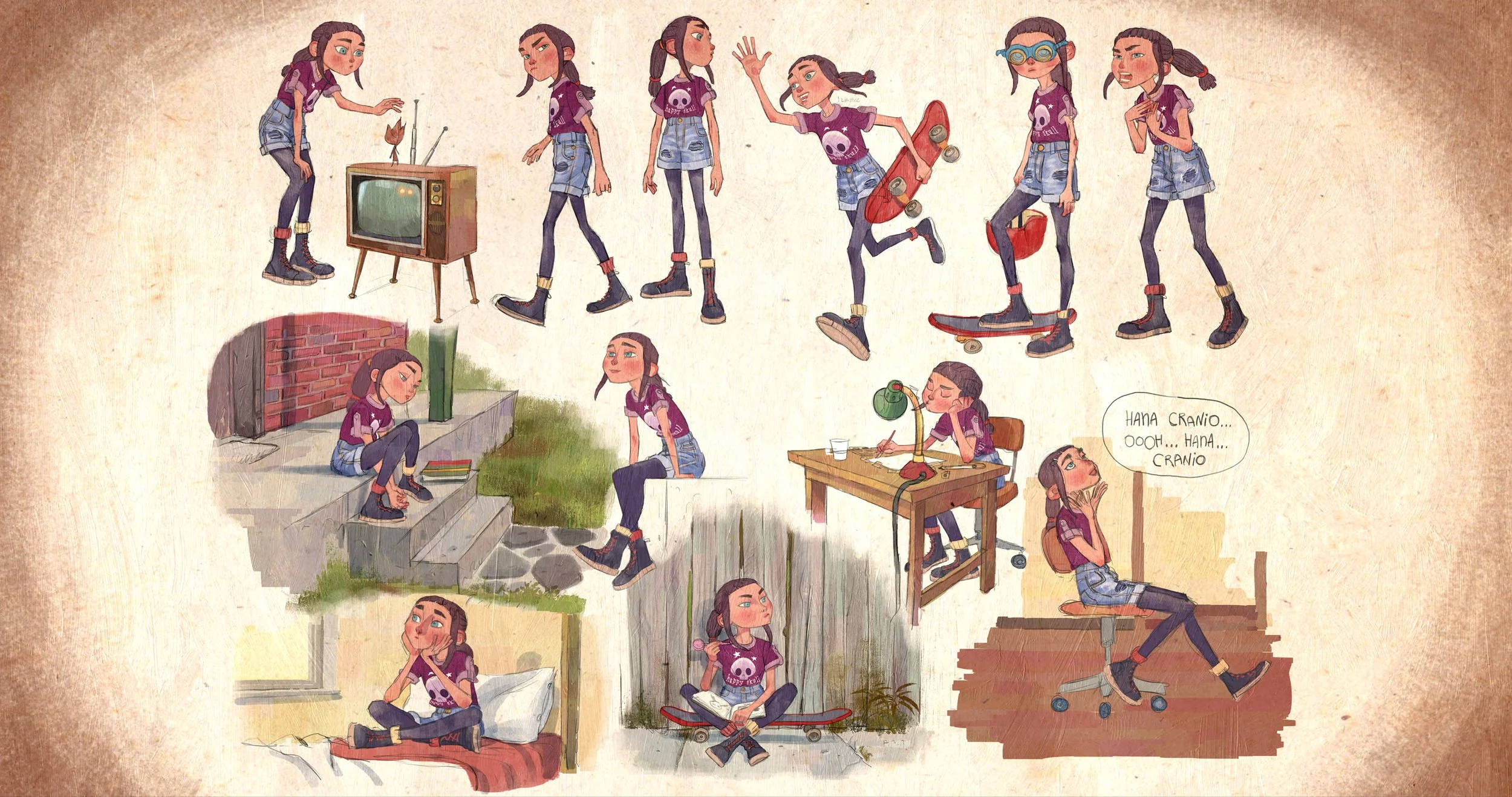
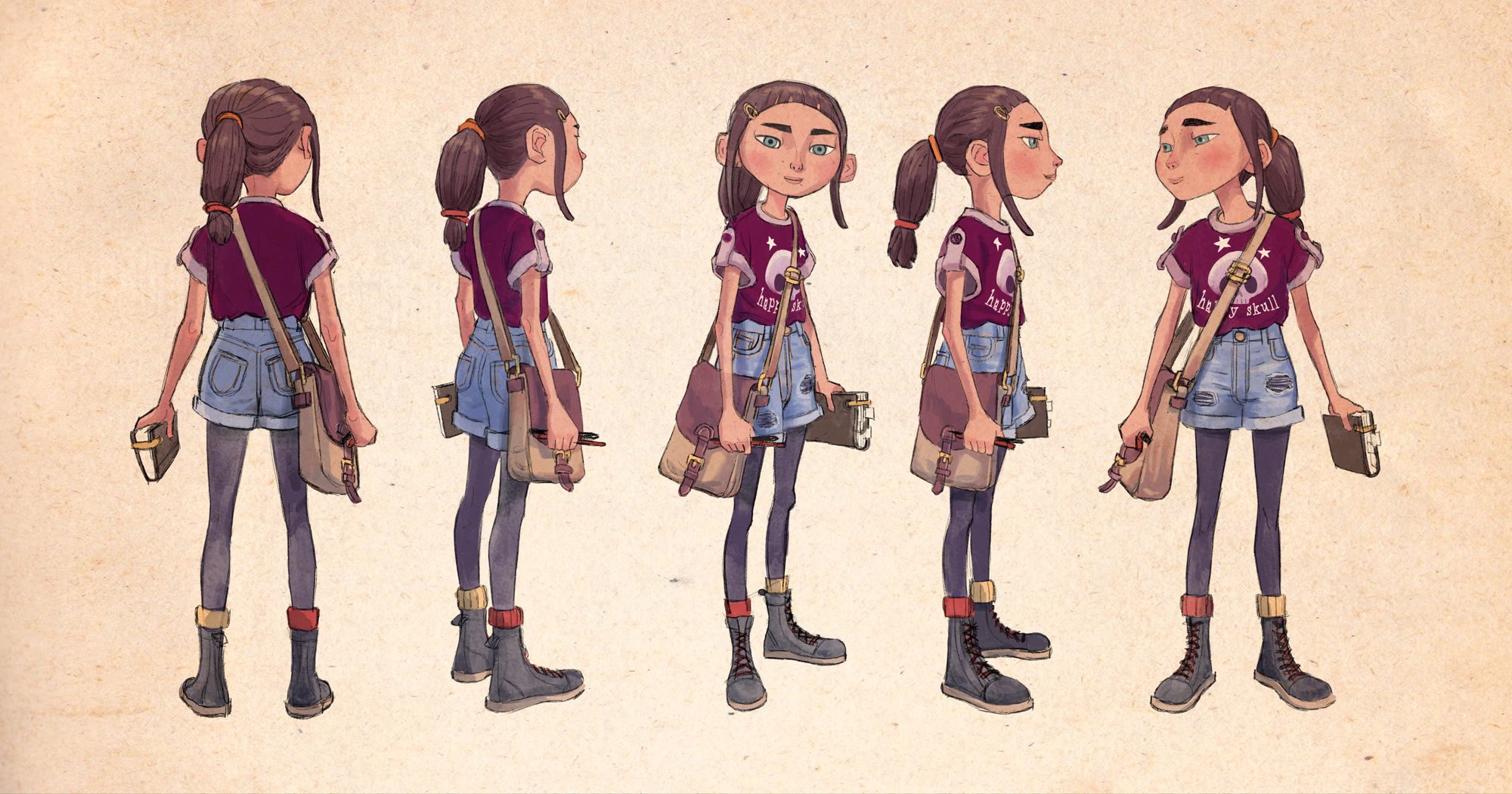
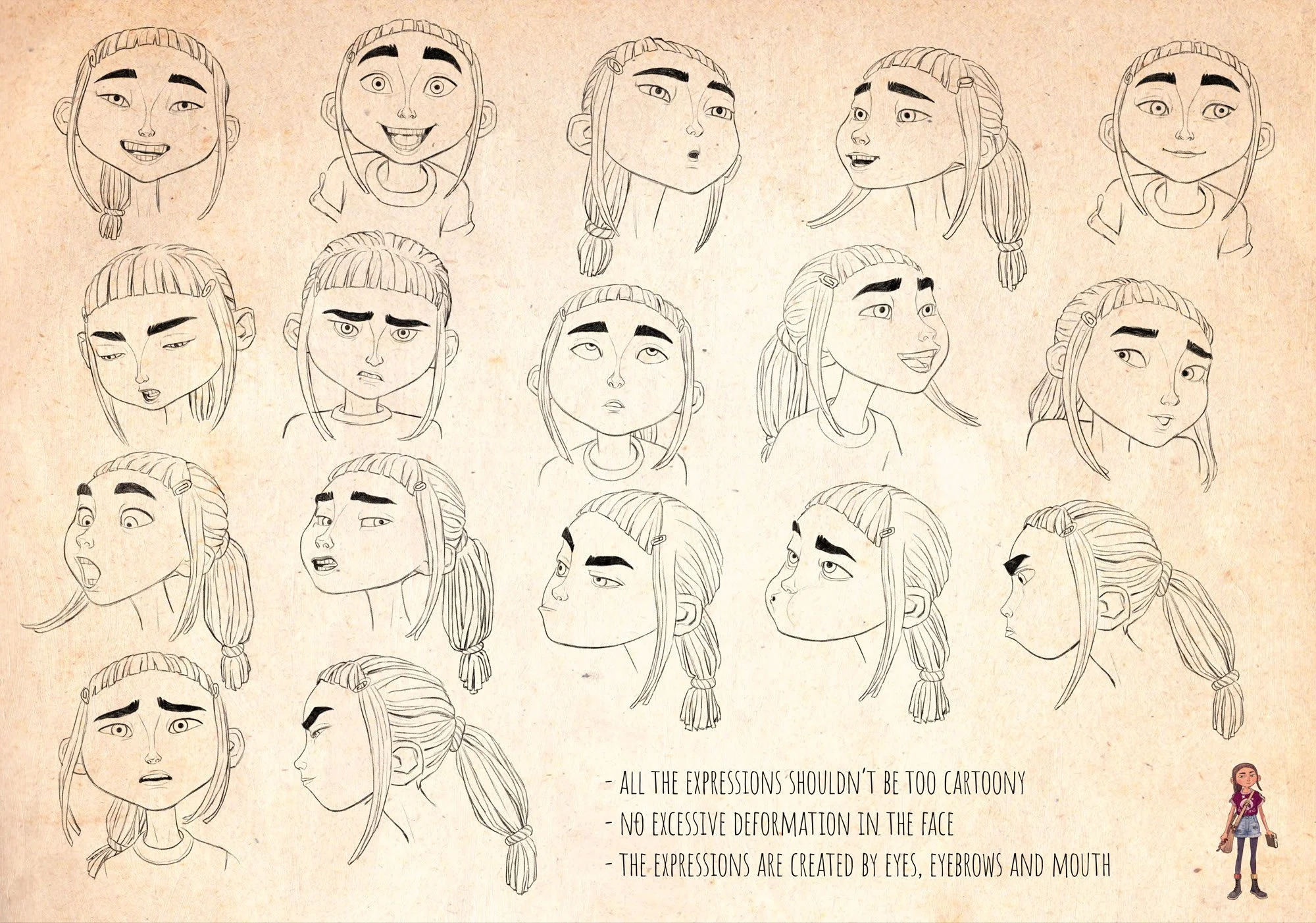
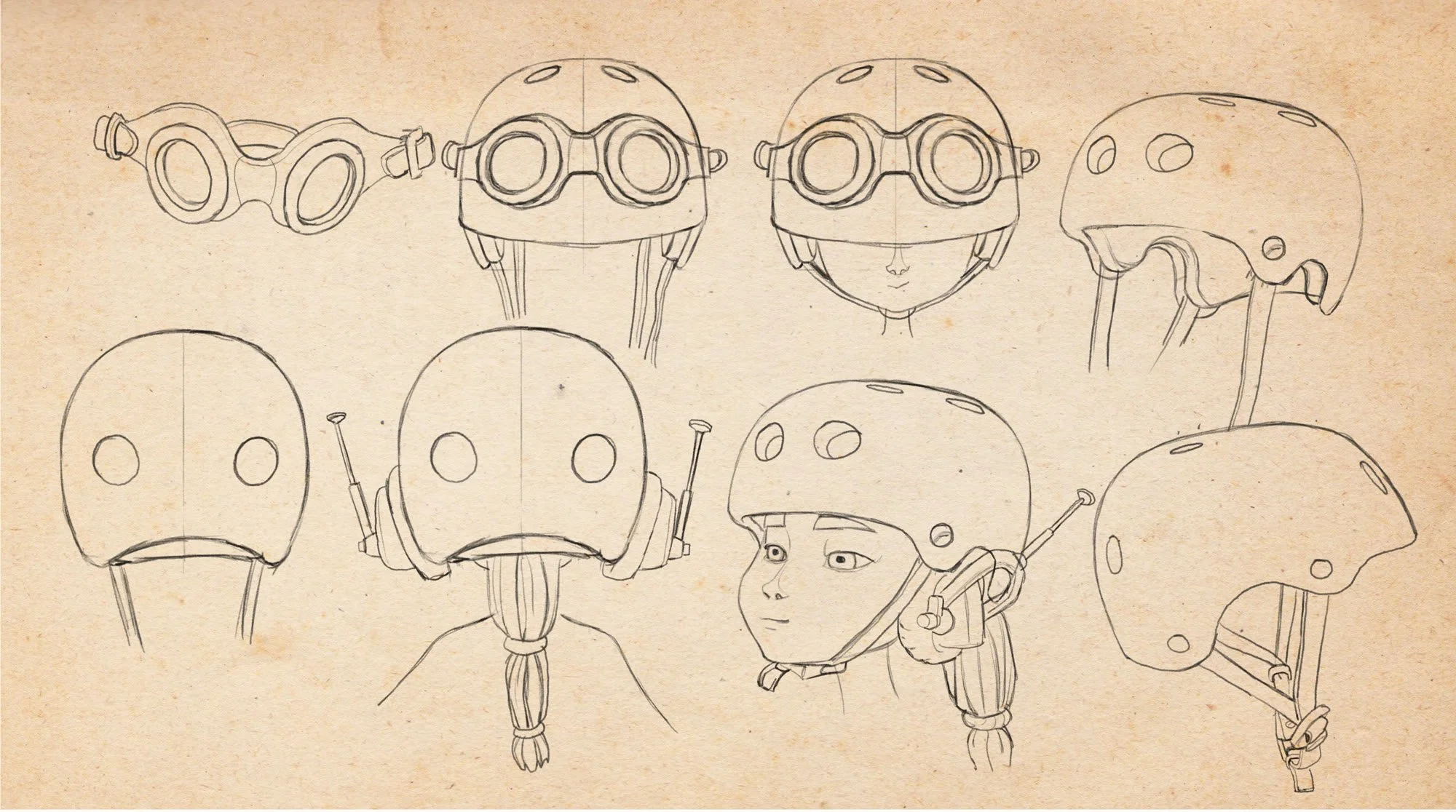
The rest of the package pins down the specifics. A turnaround so the character reads from every angle, an expression sheet that constrains how the face is allowed to move, and — because a character is designed once and then varied — a separate pass for the skate gear, which makes the skater version its own asset built from the same design:
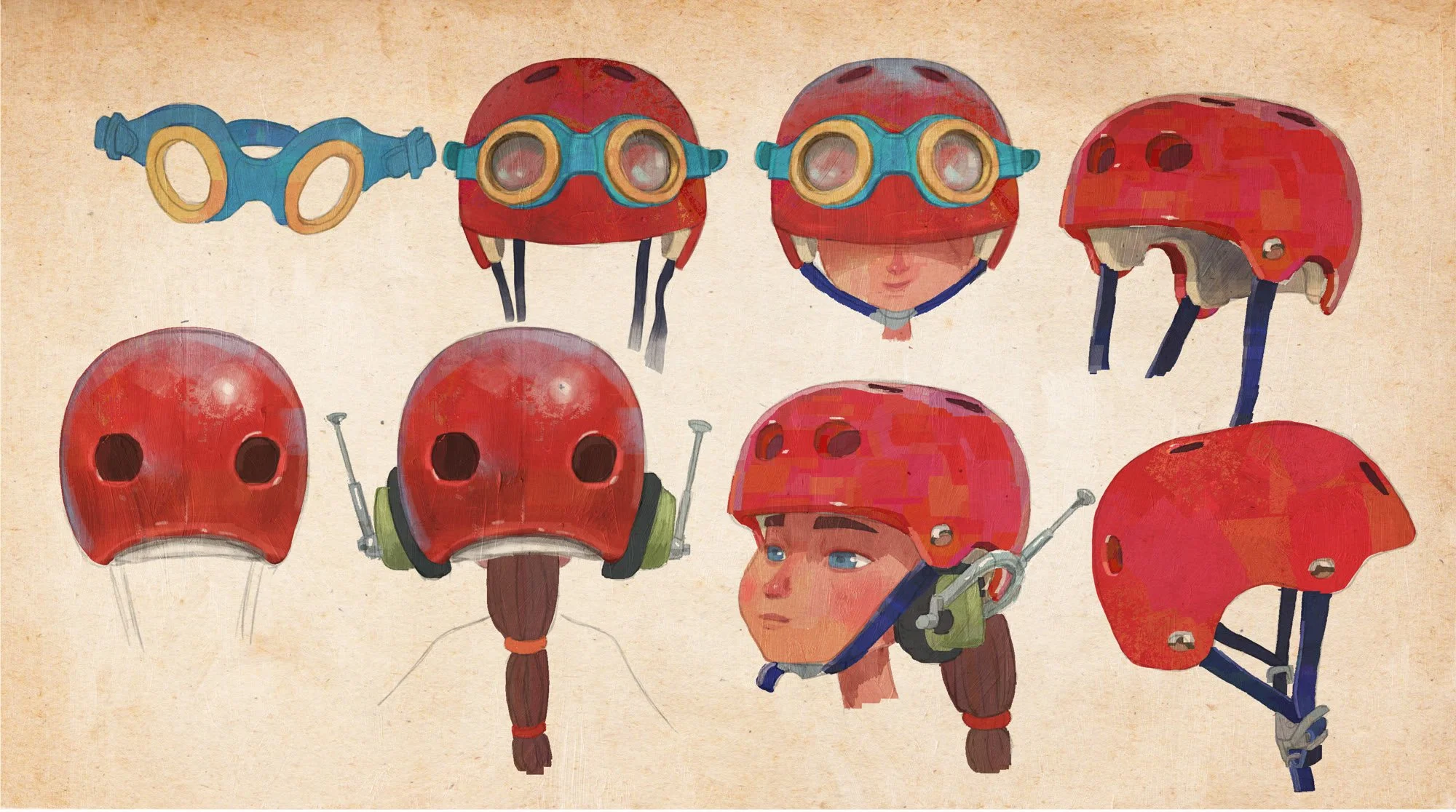
Design
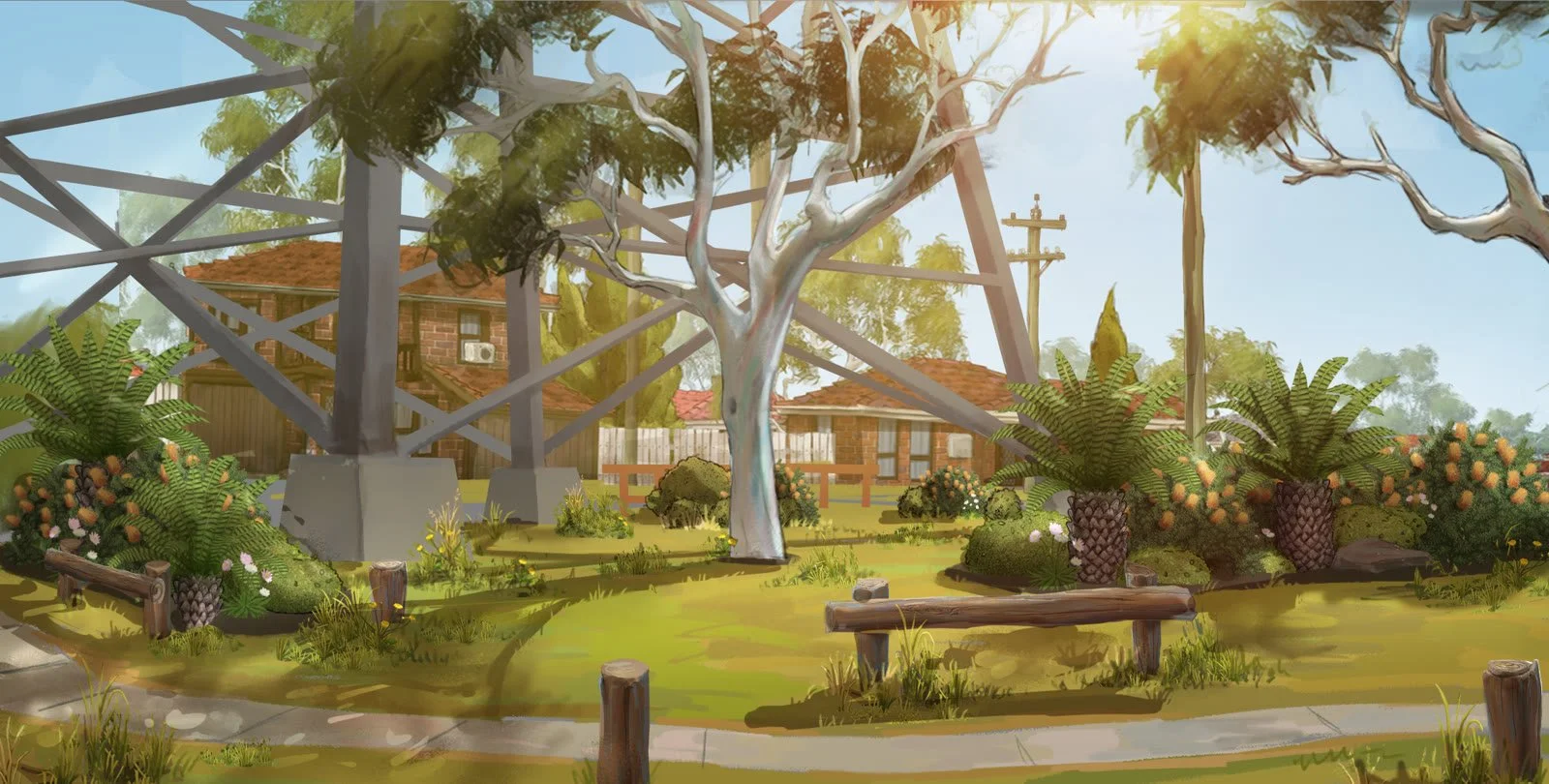
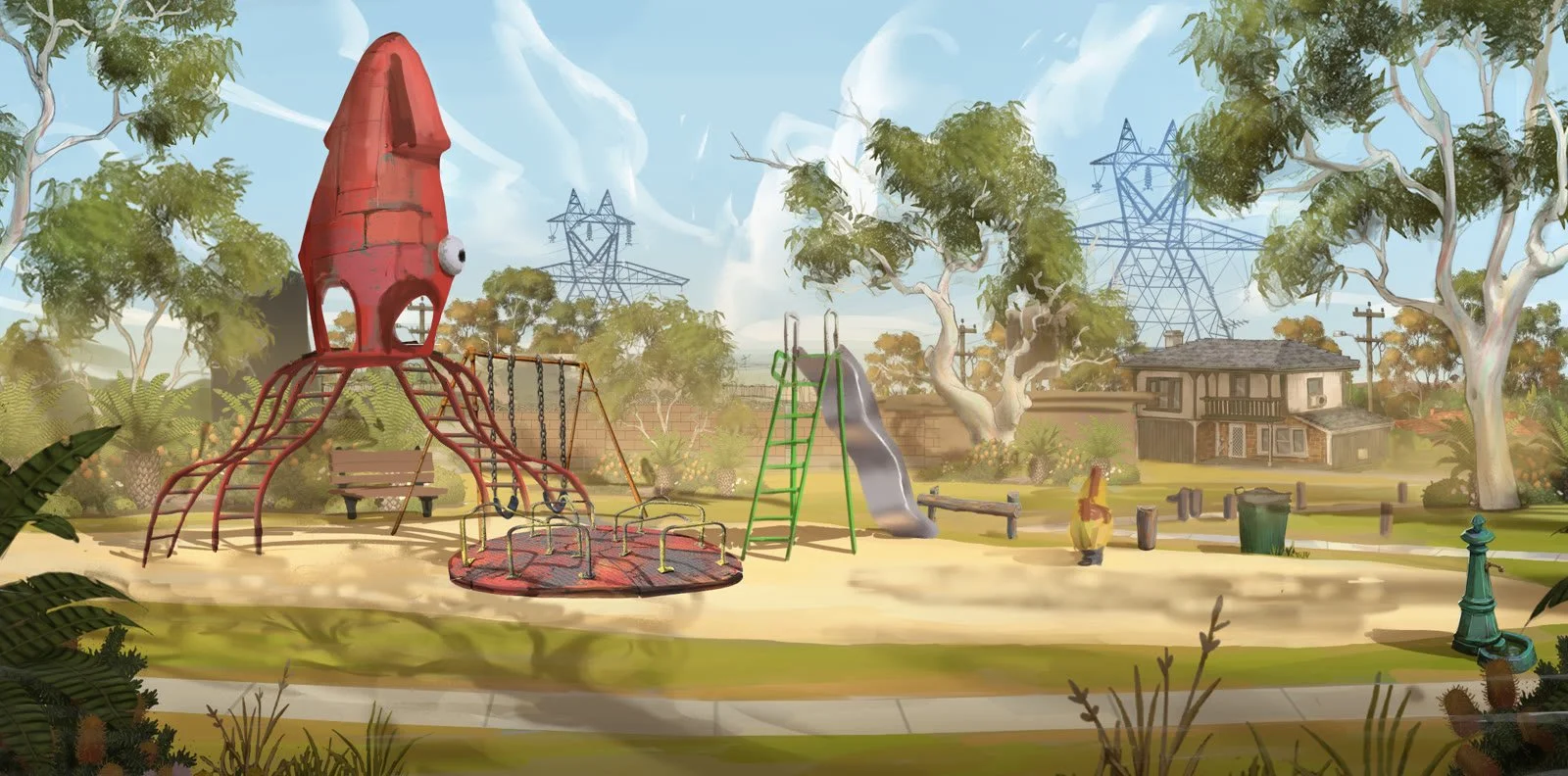
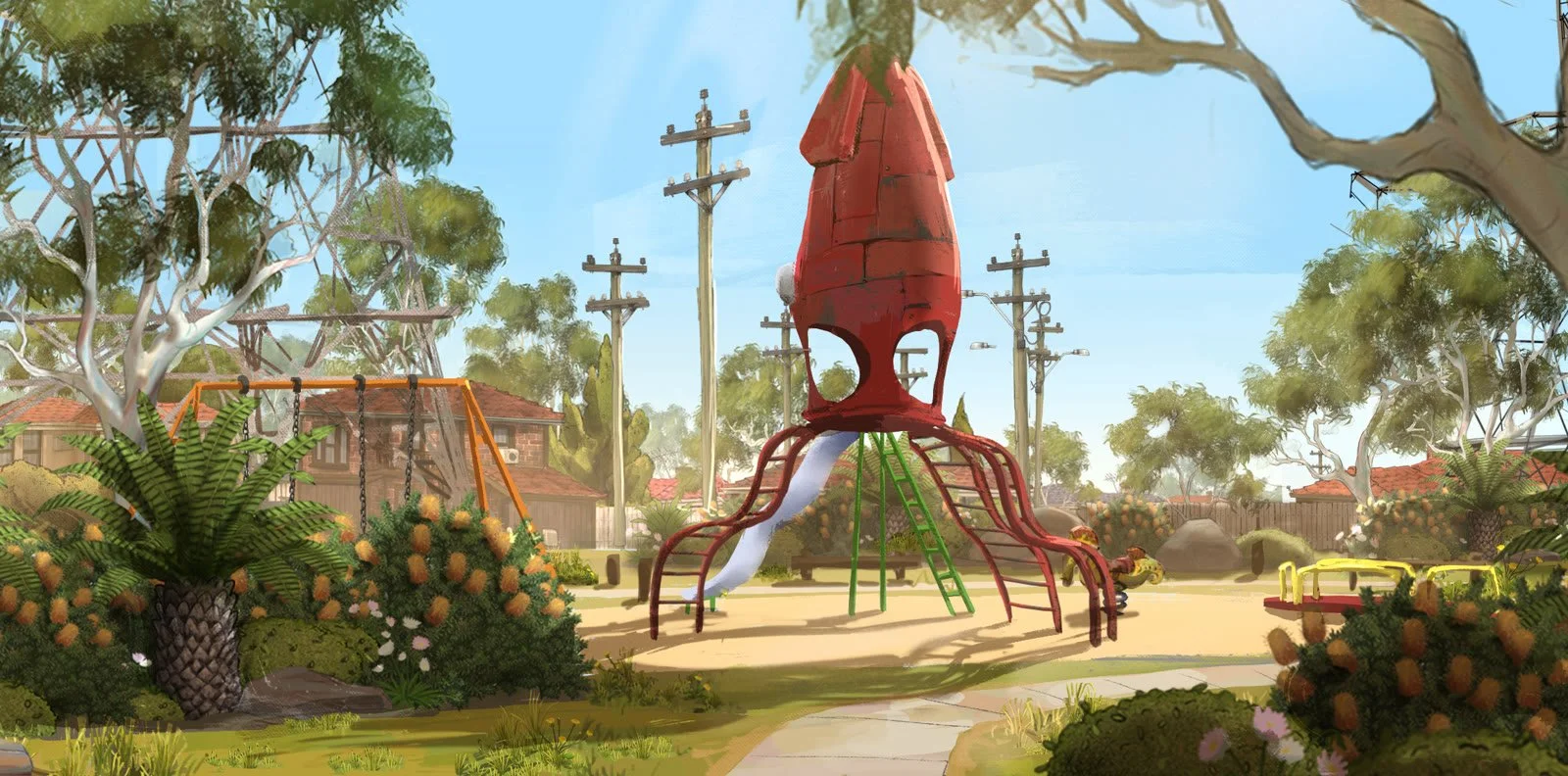
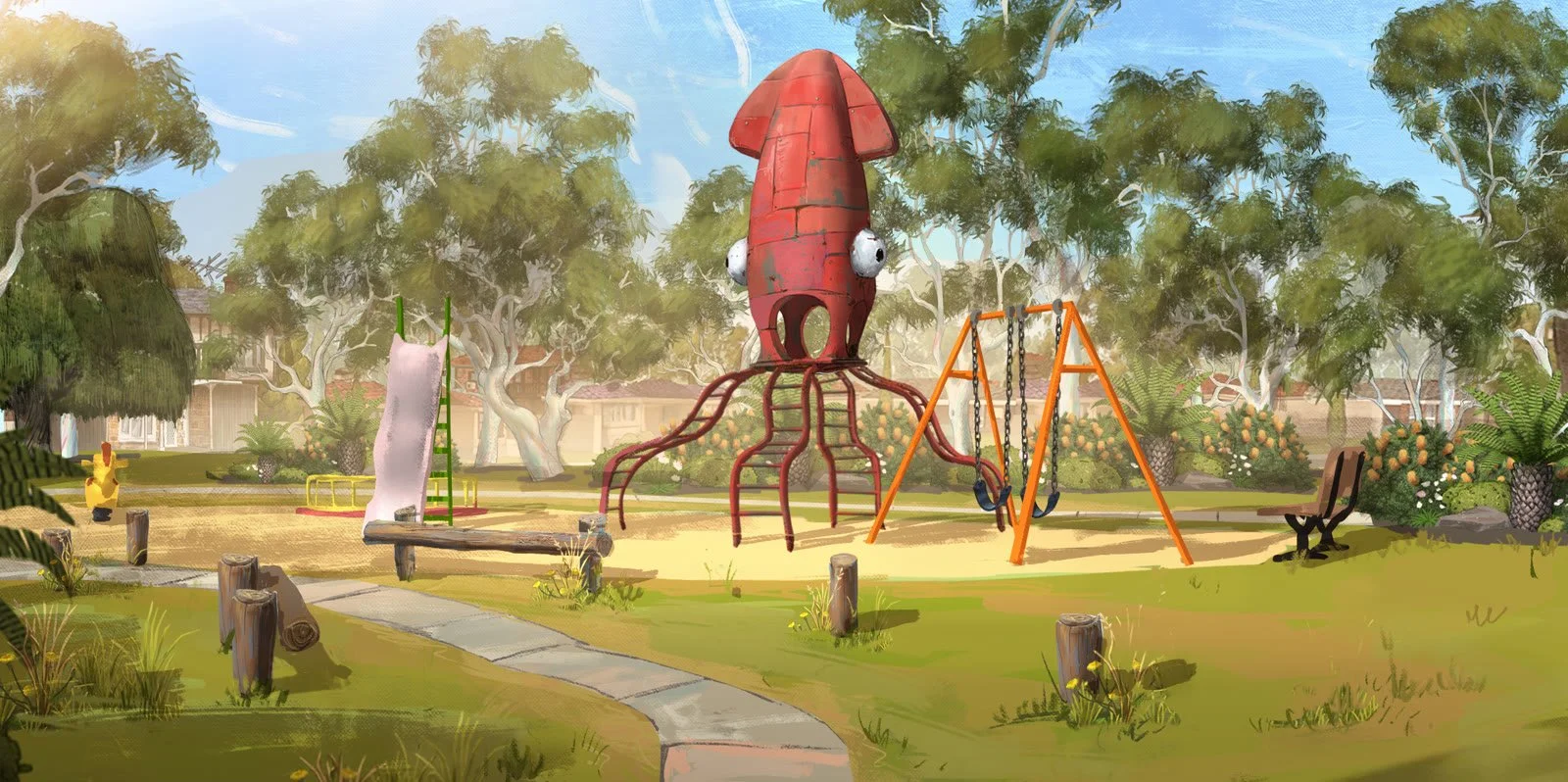
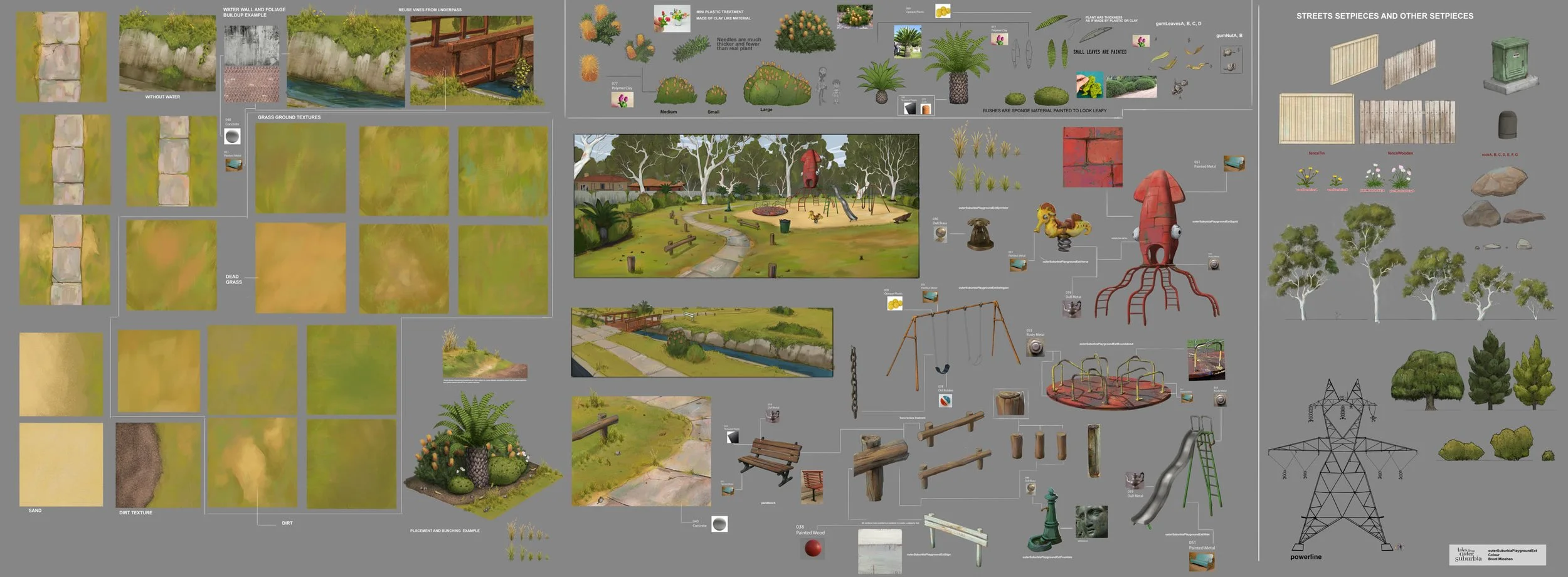
The playground
Colour concepts painted from four angles so the set reads before anything is modelled. The powerline tower and the squid climbing frame in these paintings are the same ones standing in the finished frame at the end of this page. Set design by Brent Minehan.
Phase Two
Asset creation
Everything here is built once and used many times — the whole economic basis of a series.
Everything in this phase is built once and used many times. That is true of a feature, and it is the whole economic basis of a series: the cost of building a character is spread across every episode it appears in, which is why a series invests heavily up front and why adding a new character mid-season is a bigger ask than it sounds.
Modelling
Characters, props and environments are built as 3D geometry, translating a 2D design into something that reads correctly from every angle. A design that works in a single drawing often has to be reinterpreted to hold up in three dimensions.
Surfacing
What each model is made of. Texture painting, shader authoring, and how materials respond to light — skin, fur, wet stone, worn brass. Surfacing artists work closely with lighting, since a surface only exists in relation to the light hitting it.
Surfacing
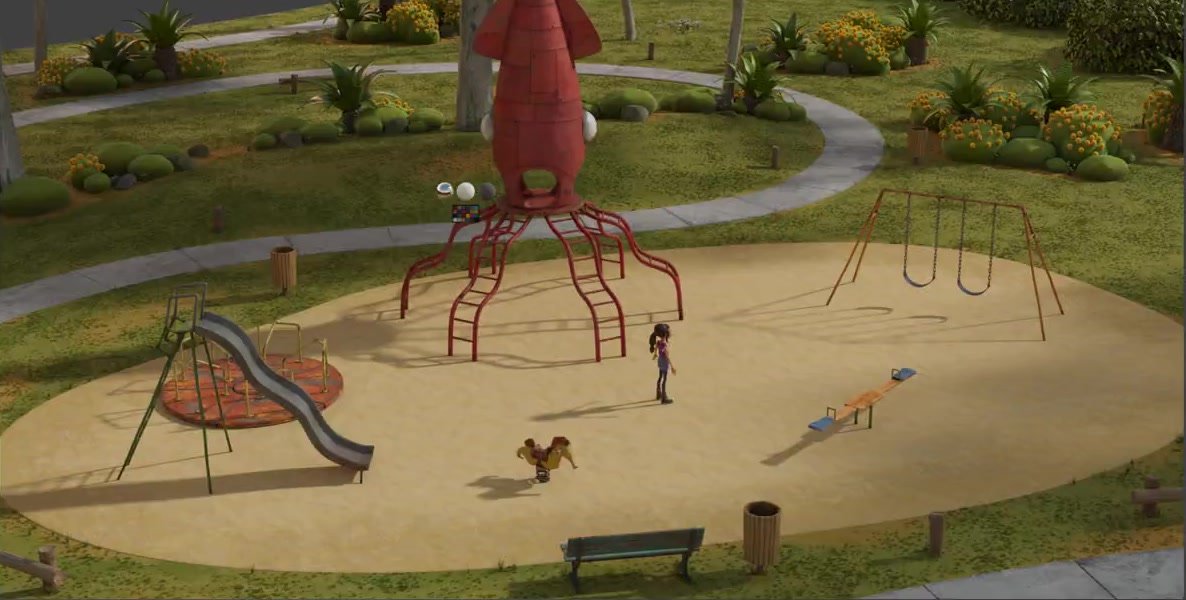
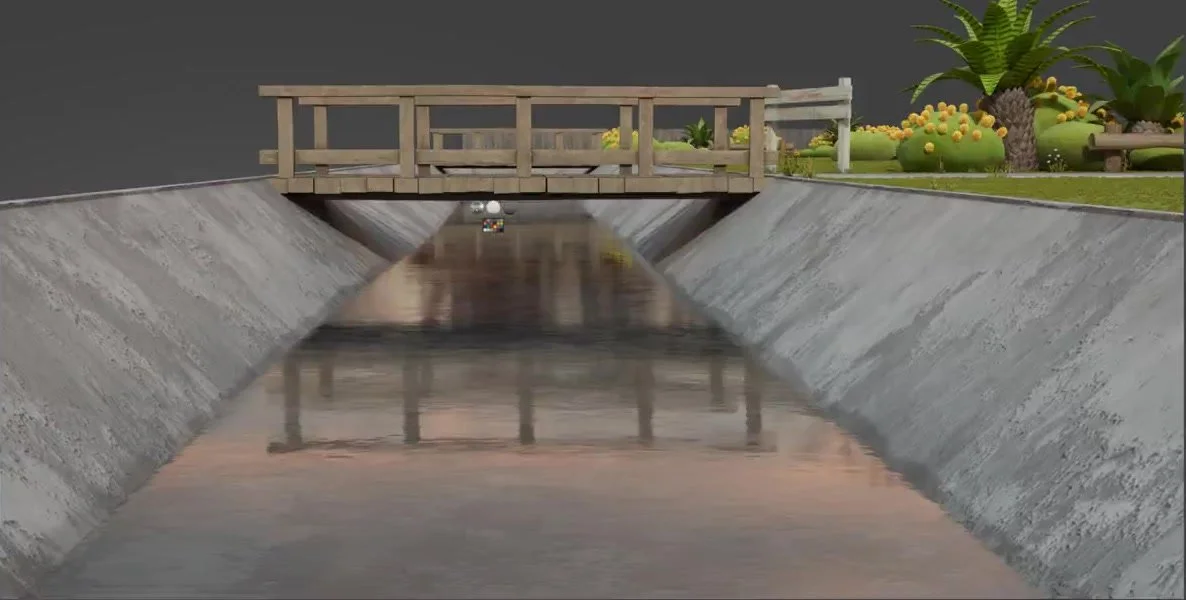
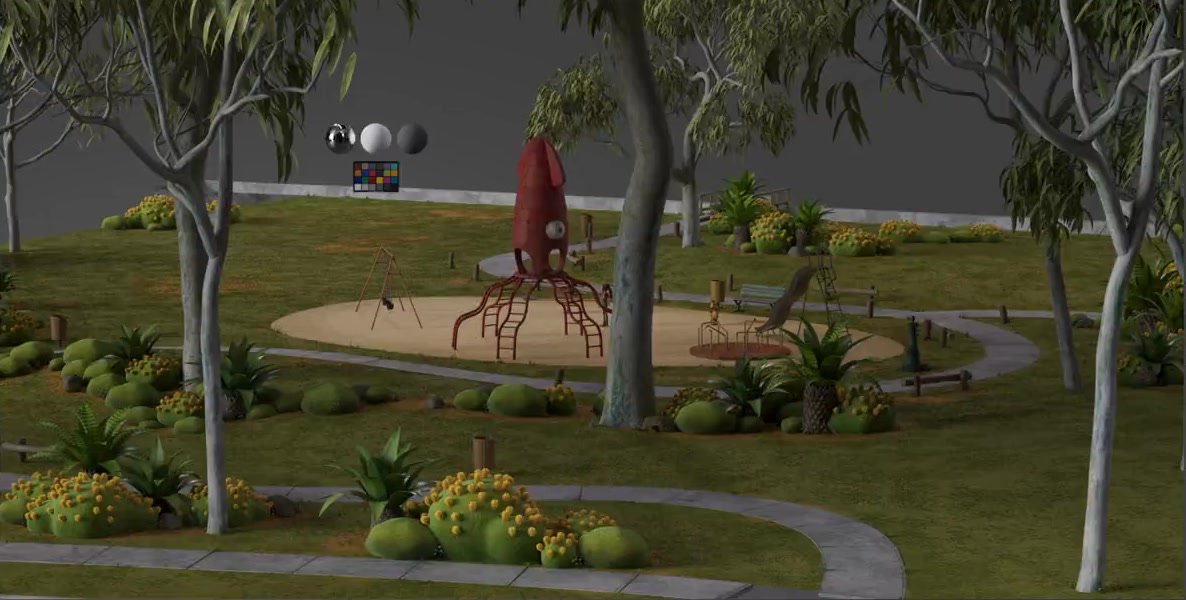
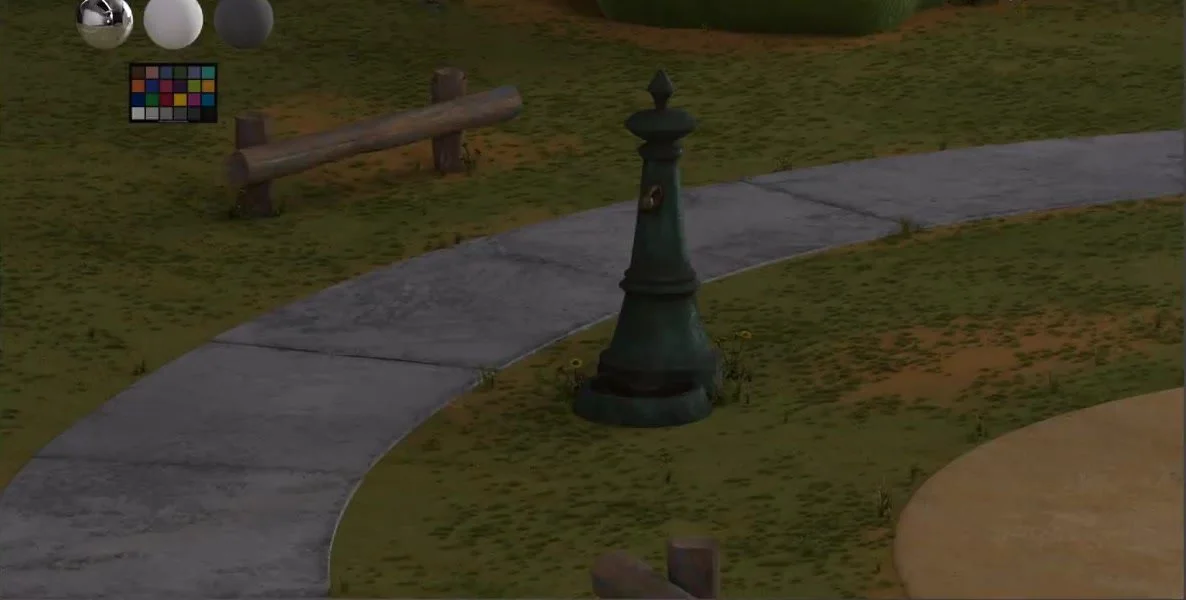
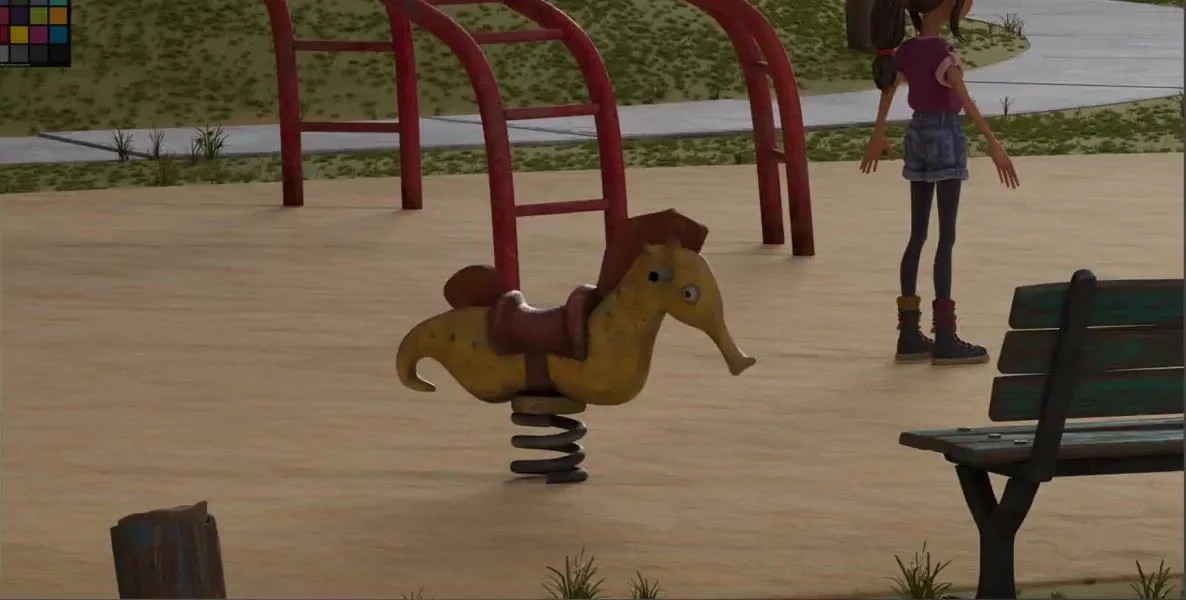
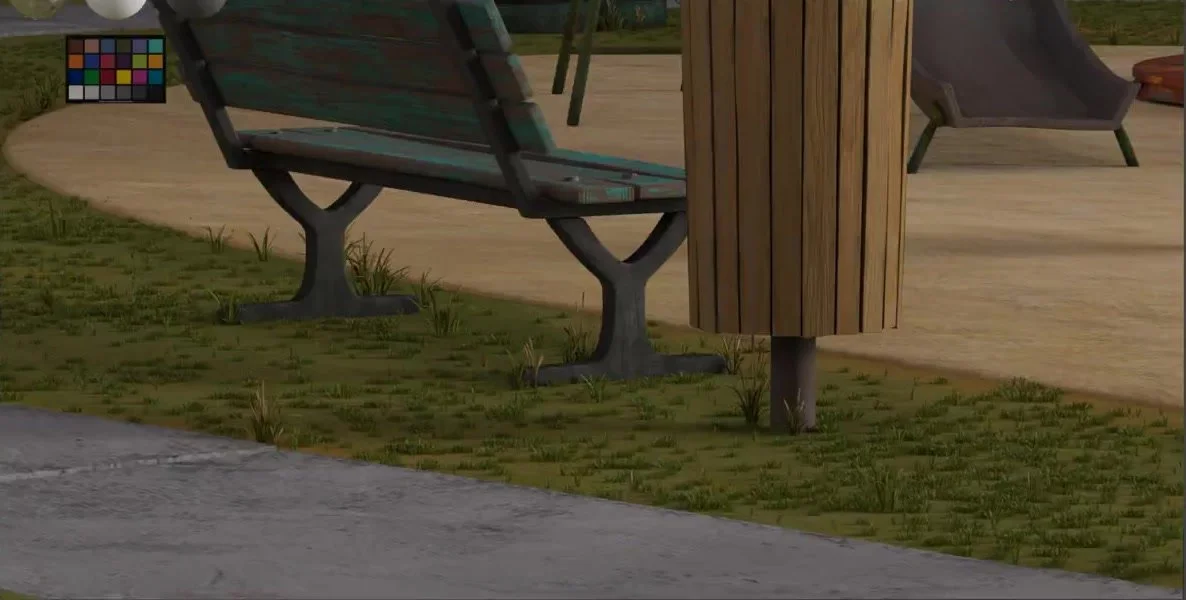
Six cameras
A set is not checked from one angle. The same materials have to hold up in a wide establishing view, in the concrete and standing water of the canal, under dappled light through the gums, and in close on the timber and painted metal of the park furniture.
Rigging
Each model is given a rig — an internal skeleton plus a set of controls an animator can actually pose. A good rig is both expressive enough for the performance and fast enough to work with interactively. Rigging is one of the highest-leverage jobs in the pipeline: every animator on the show lives inside it, and on a series they will live inside it for years.
Before it is handed over a rig goes through a range of motion test, a ROM: every control driven to its extremes to find what breaks while breaking it is cheap — geometry collapsing at the limit of a bend, a shoulder tearing when the arm goes overhead. It is deliberately not a performance. Cycles come next and are the first time the rig has to act — short walk, run and idle loops, reviewed from several cameras at once because they have to read from every angle.
3D FX
The reusable effects toolkit is built before shots need it: fire, water, smoke, dust, debris and magic systems, authored as setups that can be dropped into a shot and tuned rather than rebuilt from scratch each time. Simulated as a starting point, always art-directed — physically plausible is not the same as right for the shot.
Phase Three
Shot production
This is the part that repeats — once across a film, or per episode, over and over.
This is the part that repeats. A feature runs it once across the whole film; a series runs it per episode, with several episodes in the pipeline at different stages at any one time.
Layout
Cameras, sets and character positions are established shot by shot, translating the boards into actual 3D staging — lensing, framing, continuity across a sequence, and any final adjustments to timing before animation begins.
Layout does not get to reinvent the shot. The animatic has already settled what happens and exactly how long it takes, and layout has to hit it: the same staging, the same screen direction, the same cut points, the same number of frames. The shot still has to cut against the dialogue it was timed to, so the timing is effectively fixed before layout starts.
What makes that harder than it sounds is that a drawing is not bound by a camera. A board artist can cheat perspective, put the viewer where no lens would fit, draw a character slightly larger than the staging strictly allows because it reads better, or imply a move no real camera could make. Layout has to produce the same read using an actual lens on an actual set — and where the drawing cannot be reproduced literally, work out which part of it was load-bearing and keep that.
Animation
The performance. Animators pose characters over time to create acting, movement and weight. This is acting work as much as technical work: the animator is the performer.
The work runs in two named stages, reviewed and approved separately.
Blocking establishes the performance in key poses. The animator sets the positions that carry the storytelling — where the weight shifts, where the eyeline goes, where a beat lands — and holds them, with the motion between them stepped rather than smoothed. It looks deliberately unfinished: the character snaps from pose to pose. That is the point. Blocking is where the acting choices get argued about, because a pose is cheap to move and finished motion is not. Nothing goes forward until the blocking is approved.
Final turns those poses into continuous motion — smoothing the interpolation, then adding what the key poses only implied: overlap, follow-through, settle, the small timing offsets that stop a character reading as one rigid object. The performance itself should not change here. If it does, something was wrong in blocking and the shot has gone backwards.
3D FX
Simulated effects are created for each shot from the setups built earlier: fire, water, smoke, dust, magic, destruction, weather. Always art-directed — physically plausible is the starting point, not the goal.
Lighting
Lights are placed and balanced to deliver mood, focus and continuity, and the shot is rendered. Lighting is the last major creative pass on the 3D side — it determines where the eye goes and how the shot feels, and it inherits every decision made upstream.
Compositing
Every rendered element — characters, effects, matte paintings, 2D FX — is combined into a single image. Compositors balance the layers, integrate the drawn and simulated material so it sits in the same world, and make the final adjustments to depth, atmosphere and colour. This is where the shot stops being a collection of passes and becomes a frame.
Every element above, stacked.